
Welcome to the O|Zone Digital Tariff Authority
O|Zone Digital Tariff Authority is established by the county to facilitate activity within specific O|Zone elements—designated sites, parcels, pads, and facilities where private–public infrastructure takes root.
It doesn’t oversee the entire county, nor does it control local government. Instead, it serves as the digital framework through which the rules, rates, leases, and long-term revenue commitments for these O|Zone elements are managed.
By linking medallions to infrastructure performance and aligning to real operating activity, it brings durable, transparent structure to long-term debt and use rights—anchored in accountable use and tariff-based funding.
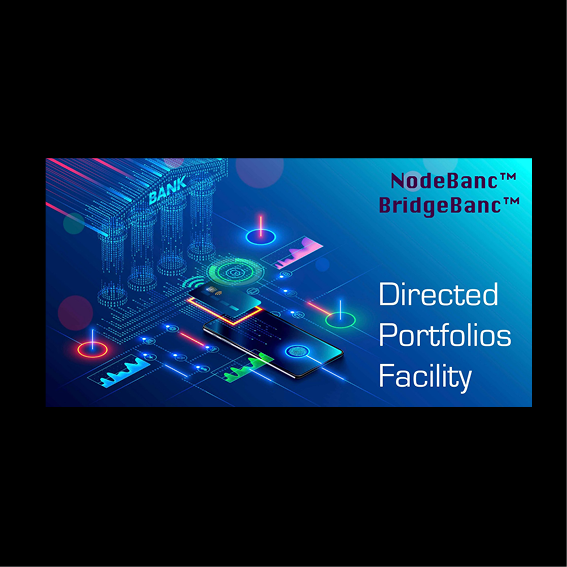
O|Zone Digital Tariff Authority doesn’t just issue medallions—it links every rate, right, and role to a living ledger. With its community bank partners serving as fiscal agents, it anchors the Directed Portfolio Facility (DPF) architecture that lets infrastructure scale without burdening taxpayers. And with Digital Twins mapped to every site and operator, the system ensures that accountability, funding, and service delivery stay aligned—now and decades into the future.

Authority Purpose & Scope
O|Zone Digital Tariff Authority is a county-established governmental infrastructure authority designed to facilitate local tariff infrastructure, transactional activity, privacy, and security, in long-term partnership with local, regional, national and international infrastructure providers.
Its core mission is to ensure the deployment and coordination of tariff systems across O|Zone non-contiguous pads and sites throughout the county. These locations are not merely users of tariff infrastructure—they are positioned to become self-sustaining nodes in a next-generation distributed mesh network, enabled by private sector innovation, AI coordination, and modular node technologies.
The Authority does not install or operate tariff infrastructure directly. Instead, it utilizes a Master Concessionaire–Sub-Concessionaire model:
A Master Concessionaire administers the overall infrastructure program, including coordinating implementation standards and oversight frameworks.
Sub-Concessionaires, including recognized private-sector infrastructure partners, are contracted to design, build, install, and maintain tariff systems in accordance with the DX-Mesh Alliance iii.o protocols.
Crucially, the Authority fosters peer to peer micro-node Opportunity Sites throughout the county. These are privately developed tariff systems operating under the Opportunity Five Roles framework (Land, Facility, Equipment, Inventory, and Operator).
These tariff infrastructure assets are privately owned and operated, often funded through Opportunity structures, yet digitally integrated into the county’s AI-governed communications mesh. As such, each Pod, site, or Opportunity Zone becomes a node in a broader countywide communications mesh, capable of:
global secure private connectivity
Integrated tariff infrastructure
Interoperating with public infrastructure via secure easements, channels and approved interconnects
Enhancing EMP resilience, reducing cyber exposure, and improving functionality.
This integrated system of decentralized node mesh, modular design, and AI synchronization transforms each O|Zone™ Opportunity Site into a contributor to countywide mesh resilience—while unlocking new financing and operational models for public and private participants alike.
Distributed Port Model for Tariff Infrastructure
O|Zone Digital Tariff Authority is architected as a Distributed Port Model, in which tariffnodes occur not at a single hub, but at a federated constellation of Sites and Pads distributed throughout the county. This reflects the reality of O|Zone’s land use structure: non-contiguous sites, often activated one at a time, each with unique needs, partners, and innovation opportunities.
Each of these nodes may contain infrastructure directly funded or governed by the Authority, or privately developed through Sub-Concessionaires.
The Authority maintains oversight and orchestration, using a Master Concessionaire governance framework, but does not rely on a single utility-scale deployment. Instead, it enables modular port tariff activation in multiple geographies simultaneously.
A key element of this distributed system is the integration with the O|Zone Government Authority’s Digital Land Library, which maps all parcels, pads, and sites in the county.
To support this model, the O|Zone Digital Tariff Authority oversees development of a Countywide Digital Tariff Infrastructure subsection of the Digital Land Library. This AI-enabled, continually updated system:
Maps tariff infrastructure connect nodes in the county,
Assesses age, vulnerabilities, capacity, redundancy, and interdependencies,
Detects and visualizes potential EMP and cyberattack risks, and
Offers interconnection planning between O|Zone sites and non-O|Zone infrastructure.
This system is not limited to new developments. It is purpose-built to bring legacy infrastructure into the planning view, enabling the Authority and its partners to mitigate risks, improve access, and proactively respond to emergencies.
These features allow the Pods themselves to become dynamic mesh participants supporting county-wide stability.
Innovation Zones and the O|Zone Innovation Hub Program
Within this distributed network, certain areas may be designated as Innovation Zones. These are strategic locations with enhanced tariff and transactional needs. Innovation Zones are often linked to Pods focused on high-compute AI, cold storage, medical scanning, research facilities, or smart manufacturing.
To support these high-value nodes, the O|Zone Innovation Hub Program is activated. This program:
Welcomes regional, national, and international institutional investors, along with high-net-worth participants, to co-invest in Innovation Zones,
Utilizes international funding instruments and digital assets as part of the investment stack,
Offers a platform for research, development, and pilot deployment of advanced tariff technologies,
Anchors cross-border innovation corridors using the Digital Medallion ecosystem and international Opportunity alignment.
Innovation Hubs can interoperate with the Distributed Port Model—serving as both intensive nodes and testbeds—and link back to the broader communications library for real-time visibility.
Digital Tariffs, Public Revenues, and Strategic Capitalization
O|Zone Digital Tariff Authority operates within a dual-funding framework that integrates digital tariff instruments and capital funding strategies to ensure long-term fiscal sustainability and infrastructure development across the county. At its core, this structure combines ongoing public-private revenue participation with tax-exempt financing tools calibrated for local community banks and aligned with evolving federal banking policy.
Digital Tariff Architecture (Medallion-Based System)
Tariff structures in the O|Zone framework are implemented through Digital Medallions—programmable digital instruments that authorize specific services, uses, or revenue activities within geographically defined zones. These medallions carry attributes such as:
Functional Rights: Medallions authorize the use of communications infrastructure or service platforms (e.g., EV charging stations, thermal exchange interfaces, micro-generation nodes).
Location Binding: Each medallion is tied to a specific site, pad, pod, innovation zone, or other defined opportunity footprint.
Capital Recovery Protocols: The medallion carries with it tariff rights which help recoup capital investment by private parties—facilitating amortization over time.
Public Sector Revenue Participation: A portion of revenue generated under each Digital Medallion accrues to the issuing Government Authority, creating a built-in public funding mechanism without taxation.
Integration with Opportunity-Based Infrastructure: The medallions are anchored in the Opportunity Framework’s Five Role structure, capturing revenue from land, infrastructure, equipment, inventory, and operator-based activities.
This model is inspired by the historic taxi medallion structure, where a right to operate is both revenue-generating and tradable. In the O|Zone context, the medallion’s programmability ensures compliance, tariff enforcement, and traceability through Calypso Decisioning machine learning technologies | digital intelligence and CER-based (Controllable Electronic Record) systems.
Integration with the Digital Tariff Authority
All medallion-based tariff rights are integrated through the county-level O|Zone Digital Tariff Authority, which governs issuance, compliance, revocation, and pricing standards. This ensures uniform governance and dispute resolution across multiple pods and operators, while allowing flexibility in zone-specific innovation clusters.
The Digital Tariff Authority operates as a distinct Government Authority within the O|Zone™ Initiative’s multi-authority framework and is authorized to cooperate across counties via Intergovernmental Cooperation Agreements, helping harmonize tariff logic across PAOZs (Port Authority Opportunity Zones).
Strategic Capitalization:
NodeBridge Instruments
Capital formation for the O|Zone Digital Tariff Authority occurs through next-generation asset-linked programs and tariff revenue.
FlexGIA™ and ParPlus Instruments: Designed to support off–balance sheet capitalization of infrastructure, reducing cost of capital and enhancing yield profile for banks, while also enabling private investors to participate in county-linked infrastructure development.
Custodial Structures and Sub-Accounts: These accounts may be established at local Community Banks and held through the Federal Home Loan Bank (FHLB) system, enabling the banks to serve as bond indenture custodians, depository institutions, fiscal agents, and bond registrars for Digital Tariff financings. This structure re-establishes the historical role of community banks as long-term service providers to local government entities. In doing so, it generates recurring service revenue streams and contributes to Tier 1 capital accumulation, reinforcing the financial strength and civic alignment of these institutions.
Holistic System Integration
Together, Digital Medallions and Strategic Capitalization create a non-tax-based revenue flywheel that benefits counties, private operators, and community banks:
County receives tariff-based revenues from each Digital Medallion.
Operators recover capital via amortized, tariff-structured income.
Banks benefit from tax-advantaged holdings and service fee income on structured accounts.
Infrastructure is deployed and modernized without depleting county general revenue funds.
This architecture is intentionally designed to de-risk infrastructure development, democratize access to mesh tariff innovations, and generate persistent local economic returns.
Ports Have Always Been Catalysts. Now They Go Digital.
Across centuries, ports have served as organizing frameworks for growth. From ancient harbors to modern sea ports, inland river hubs, trucking terminals, rail depots, air cargo zones, and now even space ports—the same principle applies:
public and private sectors working together to define access, infrastructure, and shared participation in opportunity.
O|Zone™ Digital Tariff Authority carries that legacy forward.
But instead of managing a traditional harbor, this Authority expands the concept of “port” into a distributed set of community nodes—buildings, containers, energy systems, infrastructure improvements, and locally rooted enterprises. It’s a modern application of proven port frameworks, scaled for counties and adapted for today’s economy.
As counties look to attract investment, create jobs, and build the next generation of infrastructure—from HealthPorts and ScanPorts to aquaponics centers, innovation zones, and renewable energy pods—they need a way to bring order and fairness to participation. Who can access a site? What are the rules? How are revenues allocated? That’s what tariffs do. And that’s what this Authority manages.
Rather than levying taxes or issuing municipal bonds, the O|Zone Digital Tariff Authority uses a port-inspired tariff framework to fund capital improvements and support private–public participation. Where needed, it can coordinate with local banks acting as fiscal agents and custodians, ensuring revenues flow through trusted channels in service of long-term, local outcomes.
Just as port authorities around the world are now supported by digital systems and global standards, the O|Zone™ Initiative brings these same tools into the AI and data age. Each node—whether a physical site, digital platform, or service layer—can be governed through structured tariffs, rights, and allocations across both traditional and emerging forms of value.
What begins as a rate becomes a relationship—between land and capital, operator and site, county and citizen. The O|Zone Digital Tariff Authority doesn’t oversee the ecosystem; it operationalizes it. By synchronizing finance, performance, and participation, it enables every Authority, parcel, site, and pad to grow with clarity, confidence, and care.
Rather than staffing each O|Zone government authority with its own administrative apparatus, O|Zone Digital Tariff Authority serves as a shared service layer for the county. It creates a unified, scalable, and accountable approach to managing digital and physical participation—not just for O|Zone Opportunity Sites, but also for other innovations the county may choose to pursue.
This isn’t theory. It’s an applied evolution of centuries of proven success—tailored to today’s realities, ready for tomorrow’s challenges, and grounded in the same principles that made port cities thrive.
And while the tools are digital, the results are tangible: better access, lower friction, smarter revenue allocation, and more opportunity for growth—delivered through a local government authority that knows its role: to support the county’s prosperity and its people’s quality of life.
The O|Zone Digital Tariff Authority is more than a back-office system—it’s the foundation that makes bold things possible. It gives communities the tools to attract investment, reward participation, and sustain long-term value. Whether you’re a landowner, entrepreneur, banker, builder, or neighbor, the digital tariff system ensures everyone has a seat at the table—and a clear, fair path to share in the opportunity.
Additional appendices and implementation guides available upon request